Chinese gay men’s coming out narratives and co-culture communication

LGBTQ communication is not my primary research interest. But I find the overlap in theoretical constructions and research methods between the study of LGBTQ communication and the study of minority health (which is my research interest.)

My interests in LGBTQ communication in China and co-culture theory started during a conversation with a doctoral student at Alabama many years ago. We talked about the fact that unlike in the US, the Chinese society is generally more “resistant” toward the LGBTQ communities and some even think being gay is a mental illness. [See our prior study about it]As a result, we studied the coming-out stories of gay men in China. We found the co-culture theory developed by Dr. Mark Orbe was perfect for such a study as the theory describes how marginalized group members (what he calls “co-culture group”) communicate with dominant group members.

We examined Chinese gay men’s coming-out experiences through a narrative analysis of 60 self-reported stories online. It finds that Chinese gay men’s decision to come out, their communication orientations, and the outcomes of their coming out are influenced by traditional Chinese cultural values such as family, marriage, and duty. Assertive assimilation, assertive accommodation, and nonassertive accommodation are the most used communication orientations. The study adds to co-cultural theory by demonstrating that types of social relationships affect the communication orientations adopted, at least in the context of China.

Bie, B., & Tang, L. (2016). Chinese gay men’s coming out narratives: Connecting social relationship to co-cultural theory. Journal of International and Intercultural Communication, 9(4), 351-367. doi: 10.1080/17513057.2016.1142602 [Full article]

Mental illness Stigma II

Answering the calls of Anderson and Bresnahan (2013) and Weiss, Ramakrishna, and Somma (2006) to explore the gender and cultural dimensions of illness-specific stigma, we examined how popular magazines targeting women and men in the US portrayed mental illness between 2009 and 2013 through a theory-driven content analysis.

The magazines we examined include:

Women’s magazines: Vogue, Cosmopolitan, Marie Claire, Shape, Self.

Men’s magazines: GQ, Esquire, Details, Men’s Health, Men’s Fitness

We found that women’s magazines tend to present a more positive coverage of mental illnesses by citing patients, adopting human interest discourse, and using challenge cues such as hope than men’s magazines. 

  • In terms of major topics covered, both women’s and men’s magazines paid most attention to depression, stress, and anxiety,
  • Both men’s and women’s magazines were more likely attribute mental health issues to individual causes rather than social causes.
  • Women’s magazines are more likely to give a human face to mental illnesses than men’s magazines.
  • Women’s magazines are more hopeful than men’s magazines in coving mental illness, even though both project a lack of optimism, social inclusion and fight.

Yang, Y., Tang, L., & Bie, B. (2017). Portrayals of mental illnesses in women’s and men’s magazines in the United States. Journalism and Mass Communication Quarterly,94(3), 793-811. doi: 10.1177/1077699016644559 [Full article]

Mental health and mental illness stigma I

Another research interests I shared with some of my doctoral students (former and current) was mental illness stigma. Mental illness is a serious health risk around the world, especially among young people. At the same time, mental illnesses are often highly stigmatized. In several studies, we examined the discourse around mental illness through interviews as well as analysis of media contents.

My first study on mental illness stigma explores the cultured understanding of mental health and mental illnesses among members of Generation Y in China. We conducted interviews with college students in China to collect stories about people with mental illness. A narrative analysis of more than 100 stories identified five narratives featuring the tragic genius, the psychotic criminal, the fragile victim, the antisocial recluse, and the homosexual. These narratives are gendered, in that women are the primary protagonists in the narrative about the fragile victim, while men are featured prominently in the narratives about the tragic genius, the psychotic criminal, and the antisocial recluse. Our study demonstrates that these narratives are based on, and will further reinforce, highly cultural-specific stereotypes and biases about mental illnesses in China.

Tang, L., & Bie, B. (2016). Narratives about mental illnesses in China: The voices of Generation Y. Health Communication, 31(2), 171-181. doi:10.1080/10410236.2014.940673 [Full article]

Doctor Patient Communication in China II

This study examines the doctor-patient communication in China through the perspective of patients. Patient satisfaction is an important intermediate outcome of patient-provider encounters, linking face-to-face interactions between patients and medical professionals with patients’ well-being after consultations.

Today, physician review websites provide a new venue for the study of patient satisfaction, as patients are utilizing such websites to evaluate their encounters with physicians. This study examined how parents of pediatric patients in China evaluated their pediatricians and factors associated with patient satisfaction through a qualitative content analysis of reviews (n = 7230) on the “Good Doctor Website” (haodf.com), China’s largest physician review platform.

Three dimensions of patient satisfaction were identified:

  1. pediatricians’ interpersonal manners (including friendliness, listening to patients, heartfelt encouragement, and clear explanation)
  2. ethics (including rejecting red envelopes and kickbacks and cost awareness)
  3. medical competence/overall health outcome.

This study contributes to a culturally sensitive understanding of patient satisfaction and further explains the tense physician-patient relationship in China. Practically, our findings can inform the training of pediatricians in China.

Wu, Q. & Tang, L. (2021). What satisfies parents of pediatric patients in China: A grounded theory building analysis of online doctor’s reviews. Health Communication. https://doi.org/10.1080/10410236.2021.1888437 [Read full text here]

Doctor Patient Communication in China I

The physician-patient relationship in China is highly strained. According to the latest survey conducted by the Chinese Medical Doctor Association (CMDA, 2015), 60% of medical personnel had suffered verbal abuse, and 13% had suffered physical violence in 2014. Initially, mainstream news media often blamed physicians for being irresponsible, immoral, or simply incompetent. Lately, the tide has been reversed and patients were often portrayed as being too demanding, too greedy, and too unreasonable. China’s medical schools start to teach courses in physician-patient communication based on western textbooks and theories. However, attributing the problematic physician-patient relationship to individual stakeholders’ competence or morality does not address the root of physician-patient conflicts in China: the rise of health consumerism and the change in the culture of health.

In this study, we examined the professional identities of physicians and their perceptions of the physician-patient against the backdrop of the rise of health consumerism in China. We conducted in-depth interviews with physicians in China during the course of two years to create a new theoretical perspective for the study of physician-patient communication in China. We argued that because of the marketization of healthcare in China in the last two decades, the traditional bureaucratic relationship between physicians and patients based on implicit trust was gradually replaced by an arm’s length relationship characterized by self-interest, opportunism, and mistrust. This is the cause of many communication problems and conflicts between physician and patients in China.

Tang, L., & Guan, M. (2018). Rise of health consumerism in China and its effects on physician’s professional identity and physician-patient relationship. Health Communication, 33(5), 636-642. doi: 10.1080/10410236.2017.1290015. [Read full text here]

What do Sina Weibo influencers say about health?

Social media health influencers are a new type of opinion leaders in the era of Web 2.0. Health influencers are social media influencers who focus on health-related topics. They capitalize on social media platforms for educational, financial, or political purposes. But what do they say about health?

We studied the contents of top 10 health influencers of Sina Weibo, a Chinese microblogging site equivalent to Twitter boasting over 462 million users. Here are some findings:

  • Health influencers had a clear emphasis on women’s health (OB/GYN diseases and risks related to pregnancy and childcare) and beauty and skincare (in terms of risks and benefits).
  • Overall, they used low fear appeal and high efficacy messages. However, messages containing efficacy information were less likely to be liked.
  • These influencers relied heavily on narrative evidence; however, there was no significant relationship between the use of either narrative or statistical evidence and the number of likes.

Zou, W., Zhang, W.J., & Tang, L. (2021). What do social media influencers say about health? A theory-driven content analysis of top ten health influencers on Sina Weibo. Journal of Health Communication. 10.1080/10810730.2020.1865486 [Read the full text here]

What do we believe in? Rumors and processing strategies during the COVID-19 outbreak in China

Rumors are everywhere during the COVID-19 pandemic and it is increasingly difficult to separate rumors from facts. Those first confronted by the enormous challenge of fighting this infodemic to save their lives were the people of Hubei Province in China. To understand how they defined and processed rumors, we conducted an interview study with Hubei residents when they were under lockdown. 

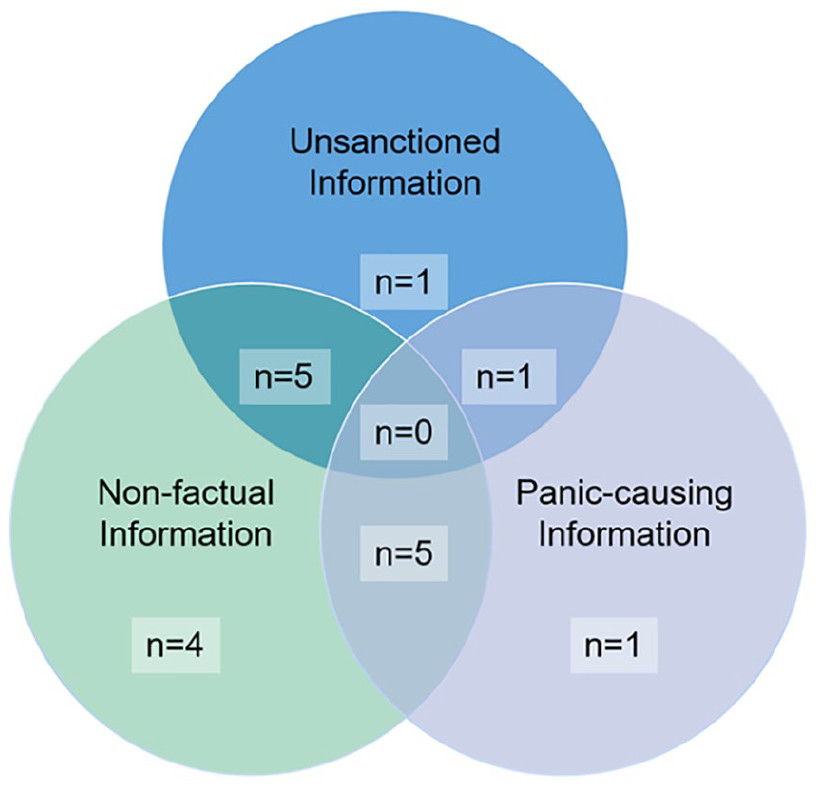
Individuals typically defined rumors in terms of one or two of three features: non-factual information, information unsanctioned by the government, and information causing panic.

Definitions of rumors.

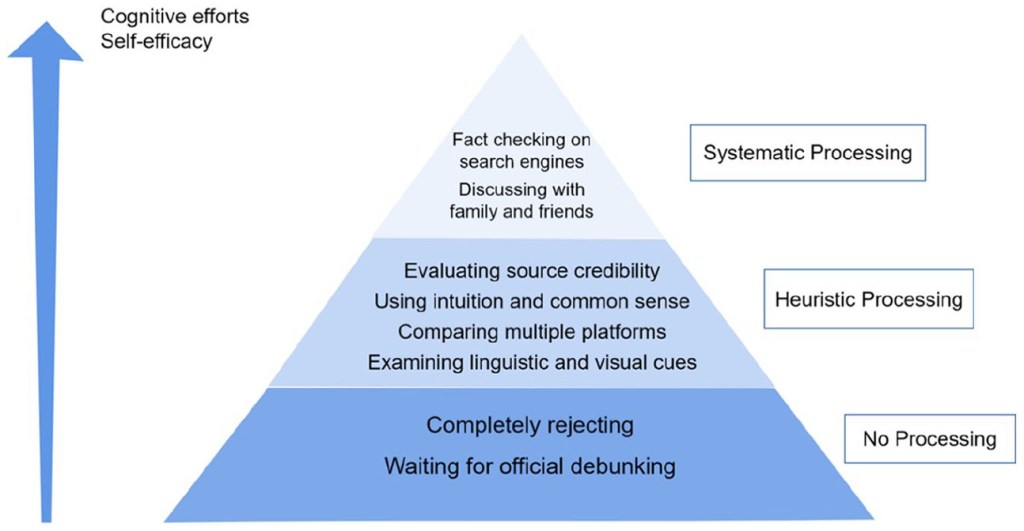
They reported low motivation in verifying the information and often either rejected any information they perceived as suspicious or waited for the government to debunk rumors. Even among those who tried to verify information, most relied exclusively on heuristic processing cues such as source credibility, linguistic and visual cues, and intuition. Systematic processing strategies such as fact-checking and discussing with family and friends were seldom used.

Strategies to identify rumors

Zou, W., & Tang, L. (2021). Rumors and processing strategies during the COVID-19 outbreak in China. Public Understanding of Science. 10.1177/0963662520979459. Free full text online

How well are public health agencies using the Facebook?

These days, public health agencies such as the CDC are increasingly using social media to communicate directly with the public. We conducted a study to examine how the CDC and state health departments were doing based on their contents in 2017. This study was guided by the Extended Parallel Processing Model. This study was led by Dr. Cui Meadows at East Carolina University.

  • The Facebook messages of both the CDC and SHDs cover a wide range of topics. This includes infectious disease outbreaks and general health issues and concerns, such as antibiotic use, cancer, cardiovascular disease, dental health, domestic violence, healthy eating, infant/child health, salmonella, smoking, travel safety, and immunization.
  • Overall, the CDC’s messages are better crafted than those of state health departments in terms of including components that have been shown to be conducive to health behaviors, such as information about severity, susceptibility, self-efficacy and response efficacy.
  • The federal and state health agencies rarely communicate self-efficacy related information on Facebook. This is problematic because efficacy information is critical to promoting healthy outcomes because high efficacy can help boost self-confidence and enhance the belief that the recommended action will work.

Meadows, C., Meadows, C. Z., Tang., L., (2020). The CDC and state health department Facebook messages: An examination of frames and the Extended Parallel Processing Model. Communication Studies 71(5): 740-752. doi: 10.1080/10510974.2020.1819839 [Full text]

That Baby Blue (Part II): The Blaming Game

Laypersons’ beliefs about mental illnesses influence their experience of mental illnesses and their likelihood of seeking help. In relation to PPD, such beliefs include culture-specific beliefs held by those without medical expertise about the nature of PPD, causes, and appropriate coping strategies. At the center of such a conceptual model are etiological beliefs, i.e. the attributions people make about PPD.

In the same study I described earlier, we explored how Chinese mothers make attributions of PPD by asking them to tell stories (stories of their own experience of PPD and stories of other women’s experiences with PPD). We found:

  • Chinese mothers often take a situational approach to PPD, attributing it to external factors that could be changed (e.g., lack of support from in-laws) or to internal factors that will disappear over time (e.g., hormonal fluctuation).
  • As a result, these mothers often choose to cope with their PPD symptoms through self-help strategies such as talking to someone, enlisting help, and positive thinking. Seeking professional help is not a preferred coping strategy.
  • Furthermore, participants often make different attributions about the PPD experiences of themselves and the experiences of others. In explaining other women’s PPD symptoms, they are more likely to evoke the myths about gender and motherhood in the Chinese culture and blame PPD on these mothers’ personality flaws, husbands’ affairs, and financial hardships.

Tang, L., Zhang, X., & Zhu, R. (2020). What causes postpartum depression and how to cope with it: A phenomenological study of mothers in China. Health Communication. Doi: 10.1080/10410236.2020.1771063. Published online first. [Full article]

That Baby Blue (Part I)

Around 8–13% of new mothers suffer from postpartum depression (PPD) worldwide. In the Greater China Region, this figure rises to around 20%. How does the Chinese culture (especially in terms of gender relationship and family dynamics) influence Chinese women understand, experience, and deal with PPD?  

We conducted interviews with 38 mothers with small children in China to find out. Some interesting findings are:

New mothers want instrumental supports from their own mothers and mothers-in-law; informational support from their friends, physicians, and the Internet; and emotional support from their husbands. Anger and stress occur when such expectations are not met. Such expectations are rooted in China’ traditional definition of families and gender roles.

  • Traditional Chinese families are extended families where three or even four generations live together. Consequently, having a child is not only the choice of a couple but also their duty to their parents, and raising a child, likewise, is the responsibility of the grandparents as much as that of the parents.
  • China’s traditional gender roles dictate that women are responsible for household chores while men are responsible for working outside the home. Hence, childcare is considered the job of women: mothers, grandmothers, and even aunts.
  • Finally, culture affects how family members in China communicate with each other regarding social support. Different from western cultures in which individuals are prioritized, Chinese culture prioritizes group goals over individual needs. Consequently, Chinese people are less likely to enlist the social support they need to avoid disrupting family harmony.

Tang, L., Zhu, R., & Zhang, X. (2016). Postpartum depression and social support in China: A cultural perspective. Journal of Health Communication, 21(9), 1055-1061. doi: 10.1080/10810730.2016.1204384. [Full article]